
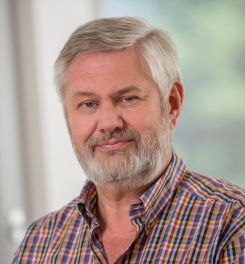
Education / Training: High School 1967 -1976, Abitur University of Cologne 1976 – 1983 study of Biology, Teacher´s State exam (High School) University of Cologne 1983-1986 Dissertation, 1986 PhD, with distinction
Honours / Qualifications: Technical University of Munich, Habilitation (Dr. agr. habil.) 1997 University for Life Sciences Weihenstephan, venia legendi, 1997 University for Life Sciences Weihenstephan, assoc. Prof., 2004
Previous Experience: Fraunhofer Institute for Atmospheric Environmental Research, Group leader, 1986-1994 GSF National Research Center, Inst. Biochem Plant Path, Group leader 1994-1999 GSF Natl Res Ctr, Inst Soil Ecology, Group leader & Research farm coordinator, 1999-2003 Helmholtz-Zentrum München, Department Microbe Plant Interactions, Deputy, 2003-1014 Helmholtz Zentrum München, Department Environmental Genomics, Deputy, since 2015
Supervision: 12 Masters Theses, 24 PhD Theses
International Experience: USDA Metabolism & Radiation Research Lab, Fargo, North Dakota, postdoc grant, 1989
Membership in international Bodies / Organizations American Society of Plant Biologists Botanical Society of America Deutsche Botanische Gesellschaft German Scientific Society for Plant Protection and Plant Health
Participation in COST actions: COST 837: Plant biotechnology for the removal of organic pollutants and toxic metals from wastewaters and contaminated sites, MC member, WG-Coordinator COST 859: Phytotechnologies to promote sustainable land use and improve food safety, MC member, WG Coordinator COST FA0905: Mineral-improved Crop Production for Healthy Food and Feed, Vice-Chair COST FA 1103: Endophytes in Biotechnology and Agriculture, MC Member COST ESSEM 1202: Conceiving Wastewater Treatment in 2020, STSM Manager COST FA
Main areas of interest: Sustainable Agriculture Uptake and Metabolism of Xenobiotics by plants & microbes Plant-Microbe interactions and signalling
Key publications
Balázs HE, Schmid COA, Feher I, Podar C, Szatmari PM, Marincaş O, Balázs ZR, Schröder P, (2018) HCH phytoremediation potential of native plant species from a contaminated urban site in Turda, Romania. Journal of Environmental Management, 223, 286-296.
Christou AT, Agüera A, Bayona JM, Cytryn E, Fotopoulos V, Lambropoulou D, Manaia C, Michael C, Revitt M, Schröder P, Fatta-Kassinos D (2017) The potential implications of reclaimed wastewater reuse for irrigation on the agricultural environment: the knowns and unknowns of the fate of antibiotics and antibiotic resistant bacteria and resistance genes – A review. Water Res., Oct 15;123:448-467.
Estendorfer J, Stempfhuber B, Haury P, Vestergaard G, Rillig MC, Joshi J, Schröder P and Schloter M (2017) The influence of land use intensity on the plant-associated microbiome of Dactylis glomerata L. Front. Plant Sci., 21 June 2017 | https://doi.org/10.3389/fpls.2017.00930.
Hartmann A, Rothballer M, Hense B, Schröder P (2014) Bacterial quorum sensing compounds are important modulators of microbe-plant interactions. Frontiers in Plant Sci.-Plant-Microbe Interaction. 08 April 2014, doi: 10.3389/fpls.2014. 00131.
Oufdou, K., Benidire, L., Lyubenova, L., Daoui, K., Abidine Fatemi, Z.E. and Schröder, P. (2014) Enzymes of the glutathione–ascorbate cycle in leaves and roots of rhizobia-inoculated faba bean plants (Vicia faba L.) under salinity stress. Eur. J. Soil Biology, 60, 98-103. doi:10.1016/j.ejsobi.2013.11.002
Reichel R, Wei J, Islam SM, Schmid C, Wissel H, Schröder P, Schloter M, Brüggemann N (2018) Potential of wheat straw, spruce sawdust, and lignin as high organic carbon soil amendments to improve agricultural nitrogen use efficiency and retention capacity. Frontiers in Plant Sciences 9: 900. doi: 10.3389/fpls.2018.00900
Schmid CAO, Schröder P, Armbruster M, Schloter M (2017) Organic fertilisation in a long-term field trial – consequences for the bulk soil microbiome as revealed by network analysis. Microbial Ecology, online first.
Schröder P, Beckers B, Daniels S, Gnädinger F, Maestri E, Marmiroli, N, Mench M, Millan R, Obermeier MM, Oustriere N, Persson T, Poschenrieder C, Rineau F, Rutkowska B, Schmid T, Szulc W, Witters N, Sæbø A (2017) Intensify production, transform biomass to energy and novel goods and protect soils in Europe – a vision how to mobilize marginal lands. The Science of the Total Environment, accepted.
Schröder P, Helmreich B, Skrbic B, Carballa M, Papa M, Pastore C, Emre Z, Oehmen A, Götz-Rösch C, Sieper T, Fekete A, Schmitt-Kopplin P, Hartmann A, Schröder P (2015) Influence of bacterial N-acyl-homoserine lactones on growth parameters, pigments, antioxidative capacities and the xenobiotic phase II detoxification enzymes in barley and yam bean. Frontiers in Plant Science. doi: 10.3389/fpls.2015.00205
Schröder P, Riedel T, Götz, C, Matucha, M, Hartmann, T, Krämer P (2013) Transport and fate of bacterial homoserine lactones in barley (Hordeum vulgare L.) Acta Phytopathologica Sinica, 43: 311, 23001
Sieper T, Forczek S, Matucha M, Krämer P, Hartmann A, Schröder P (2013) N-acyl-homoserine lactone uptake and systemic transport in barley rest upon active parts of the plant. New Phytologist, 201, 2, 554-559. online-first: doi: 10.1111/nph.12519
Yang L, Danzberger J, Schöler A, Schröder P, Schloter M and Radl V (2017) Dominant groups of potentially active bacteria shared by barley seeds become less abundant in root associated microbiome. Frontiers in Plant Sciences, 8:1005. doi: 10.3389/fpls.2017.01005.