


WASTEWATER & BIOSOLIDS MANAGEMENT 2026
SUMMER SCHOOL WWSS26
July 13-29 | Laboratory
Conference | Poster & Pitches
Lectures | Quiz & Exercises
Find our Program HEREIoannis K. Kalavrouziotis
Professor Hellenic Open University
Do you have knowledge, experience, or research worth sharing? Join the 9th International e-distance learning Summer School on “Wastewater and Biosolids Management” (WWSS26) and take part in a unique educational, scientific, and networking opportunity!
About the Summer School
Welcome to WWSS26 – Where Wastewater Knowledge Meets Global Insight!
The International e-distance learning Summer School on “Wastewater and Biosolids Management” (WWSS) is a distinguished educational initiative that brings together academics, researchers, professionals, and stakeholders from around the world who are involved in water, wastewater, and environmental management sectors.
Established in 2015, the WWSS series has evolved into a successful and globally recognized platform for learning, collaboration, and innovation. Over the years, it has connected participants from multiple countries and diverse disciplines, fostering international dialogue and advancing modern wastewater management practices.
In a rapidly evolving global context, technical expertise alone is not enough to address modern environmental challenges. Today, meaningful solutions require not only scientific knowledge, but also practical understanding, international collaboration, and real-world experience.
At WWSS26, we embrace this synergy by offering a dynamic platform for knowledge exchange, exposure to innovative technologies, and interaction with international experts. Through lectures, lab activities, online visits to wastewater treatment plants, and a dedicated Conference–Workshop, participants engage in a comprehensive learning experience designed to enrich both academic and professional development.
Flexible Online Learning
Experience the full WWSS26 program from anywhere in the world!
- Synchronous (Live) Sessions: Interact with instructors, participate in discussions, and join live workshop.
- Asynchronous Materials: Watch lectures, complete assignments, and explore virtual lab exercises at your convenience.
All learning is fully online, designed to fit your schedule and time zone.
Who Should Attend?
WWSS26 is designed for individuals involved or interested in the field of wastewater, biosolids, and environmental management, including:
- Master’s Students
- PhD Candidates
- Early-Career Researchers
- Engineers & Environmental Scientists
- Wastewater & Biosolids Professionals
- Public Sector Representatives & Water Utility Personnel
- Consultants & Industry Practitioners
- Stakeholders in Water, Waste & Environmental Sectors
Topics
- Linking Climate Change Impacts and Wastewater Treatment Strategies
- Catalysis in Wastewater Treatment. Processes and Innovations
- Sustainable Agricultural Practices through Wastewater Treatment and Reuse
- Adsorption Mechanisms and Adsorptive Materials in Wastewater Management
- Microbiology, Public Health, and Wastewater Management
- Energy Valorization of Sewage Sludge and Biosolids
WWSS26 Speakers
Registration Fees
Join WWSS26 at an accessible cost adapted to different participant categories:
150 € for Students
200 € for Professionals & All Other Categories
Registration and fee payment will be completed exclusively through the Centre for Continuing Education and Lifelong Learning (CCE/KEDIVIM) online platform.
[Register (coming soon)]
Poster and Pitch Session
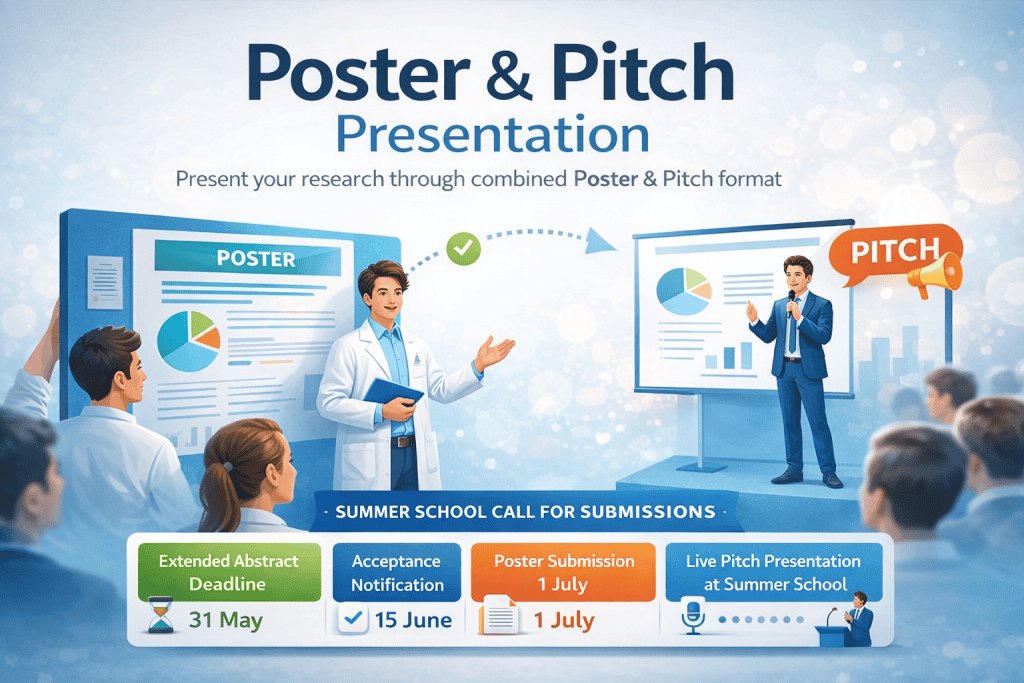
The Summer School invites participants to present their work through a combined Poster & Pitch format, aiming to highlight key research outcomes while fostering concise and effective scientific communication.
Submission Process
- Extended Abstract (2 pages) — Submission deadline: 31 May
- Notification of Acceptance — 15 June
- Poster Submission — 1 July
- Live Pitch Presentation (5 minutes) — During the Summer School
Format Guidelines
- Extended Abstract: Authors must prepare a two-page extended abstract using the official Microsoft Word template provided below.
The extended abstract must be exactly two pages in length and should include the title, author names and affiliations, the main body of the abstract, acknowledgments, and up to five references where appropriate.
- Poster: Authors are required to prepare their poster in accordance with the official poster instructions provided below.
- Pitch: A five-minute oral presentation summarizing the poster’s key points, relevance, and overall impact.
Previous Summer Schools